Sliding Puzzle
About Sliding Puzzle
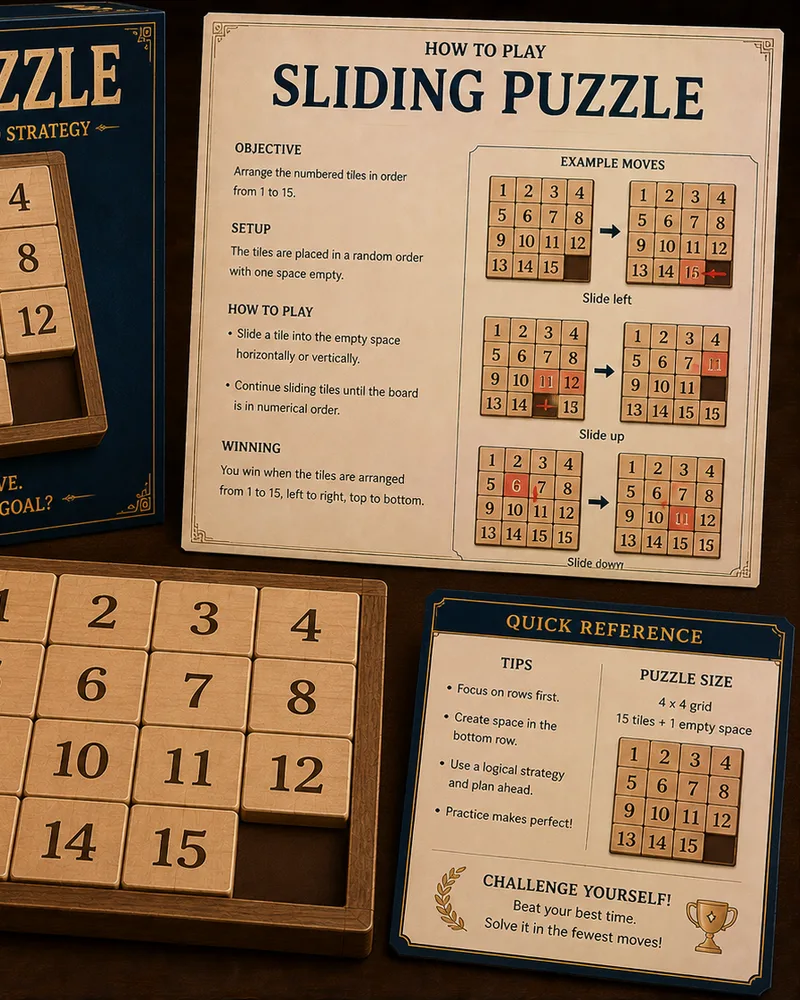
The Sliding Puzzle is a tile puzzle where numbered tiles sit in a grid with one space left empty. You slide tiles into the gap one at a time, and your goal is to shuffle them back into order. The classic version is the fifteen puzzle, a four-by-four grid with tiles numbered 1 to 15.
It set off a real craze in the 1880s, so much so that a prize was famously offered for solving an arrangement that was secretly impossible. That history hints at the puzzle's charm: it looks like simple shuffling, but restoring order efficiently takes planning, since every tile you move nudges the others out of place.
You can play the Sliding Puzzle free in your browser with no download. Small grids are quick and forgiving, perfect for a first try, while the larger boards at higher levels demand a real method. Once you learn to solve it row by row, even the big versions become a satisfying, orderly challenge.
Controls
You play by sliding tiles into the empty space. Click a tile with a mouse on a laptop, or tap it on a phone; any tile sitting directly next to the gap slides over to fill it, opening a new gap where it was.
The whole puzzle comes from this one limitation:
- Sliding a tile only works for tiles right beside the empty square. You cannot lift or jump tiles, so every move shuffles the gap around the board.
- The goal order is the numbers arranged in sequence, left to right and top to bottom, with the empty space ending in the bottom-right corner.
Because moving one tile disturbs its neighbors, solving is about order and method rather than brute force. A Shuffle button scrambles the current board again if you want a fresh attempt at the same size.
The grid grows larger across eight levels, from small, quick boards to bigger ones that reward a solving technique.
Tips
- Solve the top row first, then the left column. Locking in the top row and left column early shrinks the puzzle to a smaller grid, and you never have to disturb the parts you have already finished.
- Work one row or column at a time. Completing the board section by section keeps the problem manageable, since you only ever juggle a few tiles instead of the whole grid at once.
- Learn the last-two-tiles trick for a row. The final two tiles of a row need a small rotation to place without breaking the rest. Learning that one maneuver removes the most common sticking point.
- Plan the path of the empty space. The gap is your only tool, so thinking about where it needs to travel to move a target tile keeps you from shuffling aimlessly.
- Don't disturb finished sections. Once a row or column is correct, route your moves around it. Breaking a solved part to fix another usually costs you more moves than it saves.
- Reduce to the final small square. Every sliding puzzle comes down to a little two-by-two or three-tile finish. Recognizing that end state helps you steer the whole board toward it.
Frequently asked questions
Is the Sliding Puzzle free to play?
Yes. You can play as much as you want with no download and no account.
How do you play the Sliding Puzzle?
You have a grid of numbered tiles with one empty space. You slide tiles into the gap one at a time, working to arrange the numbers in order with the empty space ending in the bottom-right corner.
How do you solve a sliding puzzle?
The reliable method is to solve it in sections: complete the top row and left column first, then repeat on the smaller grid that remains, until only a small square is left to finish.
Is every arrangement solvable?
The puzzles here always start from a solvable arrangement, so you can be sure a solution exists. Historically, some shuffles are impossible, which is where the famous unsolvable-prize hoax came from.
Can I play the Sliding Puzzle on my phone?
Yes. It runs in any modern mobile browser, and you slide tiles by tapping, so it works well on phones and tablets.
How do I get better at the Sliding Puzzle?
Learn to solve row by row and column by column without disturbing finished areas, and practice the small rotation for placing the last two tiles of a row. That method makes even large boards straightforward.
More like this
Sudoku
Puzzle1.7M NEW
NEW2048
Puzzle1.5M
Minesweeper
Puzzle845.0K
Mahjong Solitaire
Puzzle660.0K NEW
NEWBlock Puzzle
Puzzle890.0K NEW
NEWTower of Hanoi
Puzzle96.0K NEW
NEWLights Out
Puzzle88.0K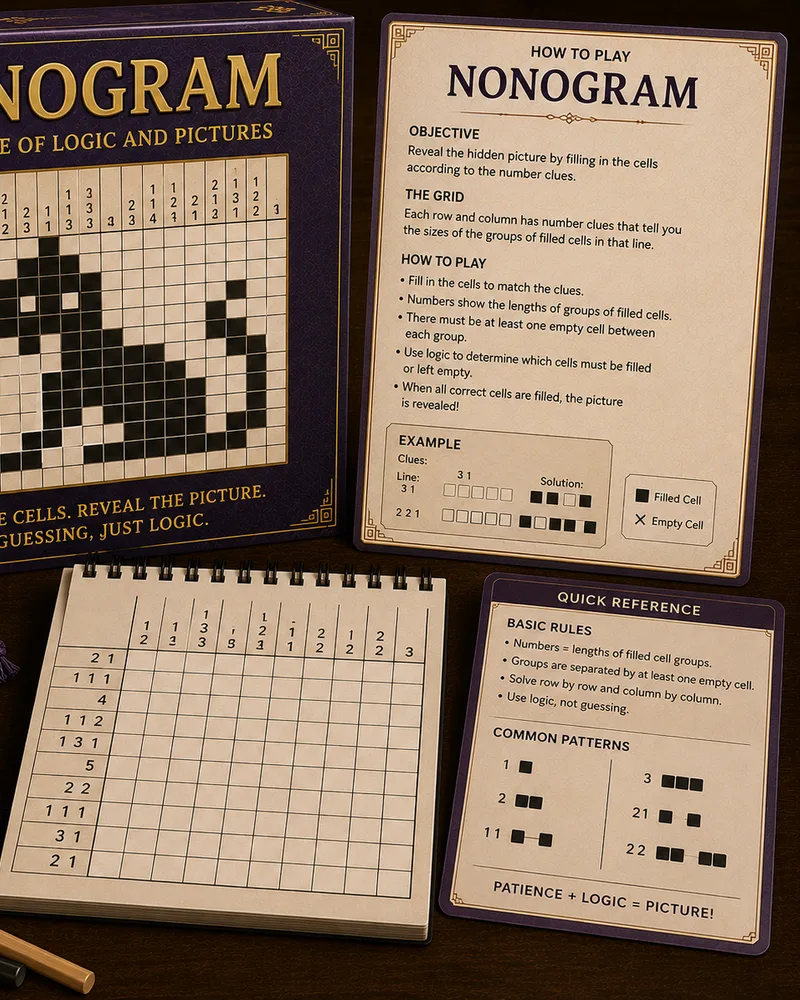 NEW
NEWNonogram
Puzzle134.0K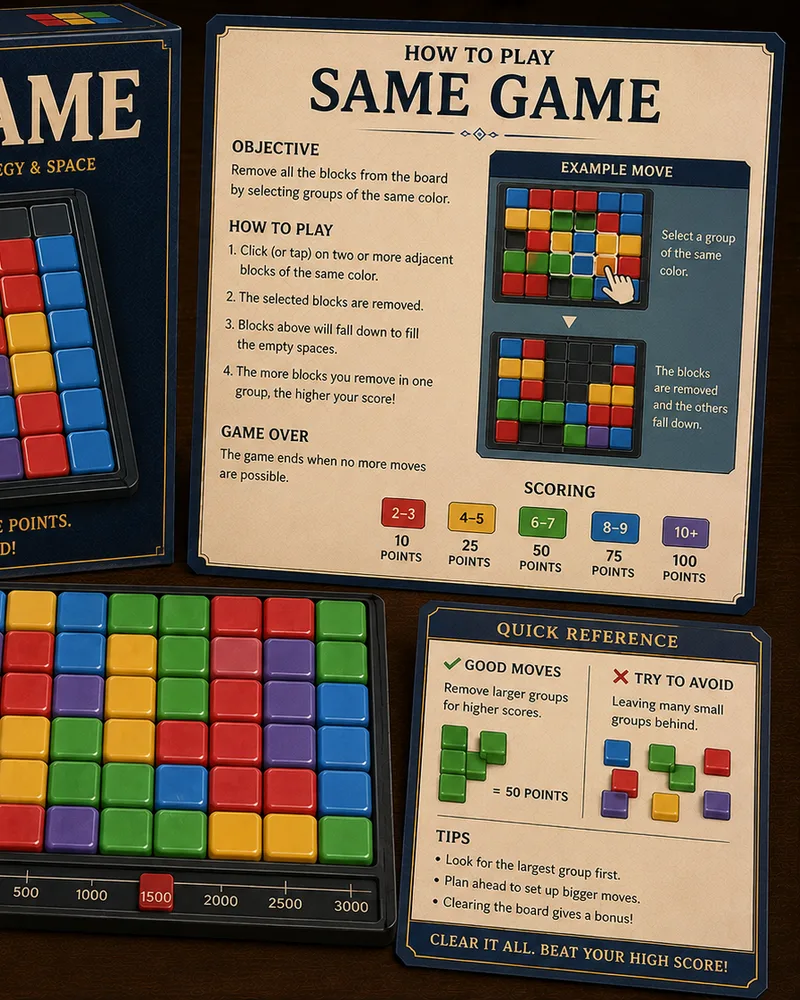 NEW
NEWSame Game
Puzzle118.0K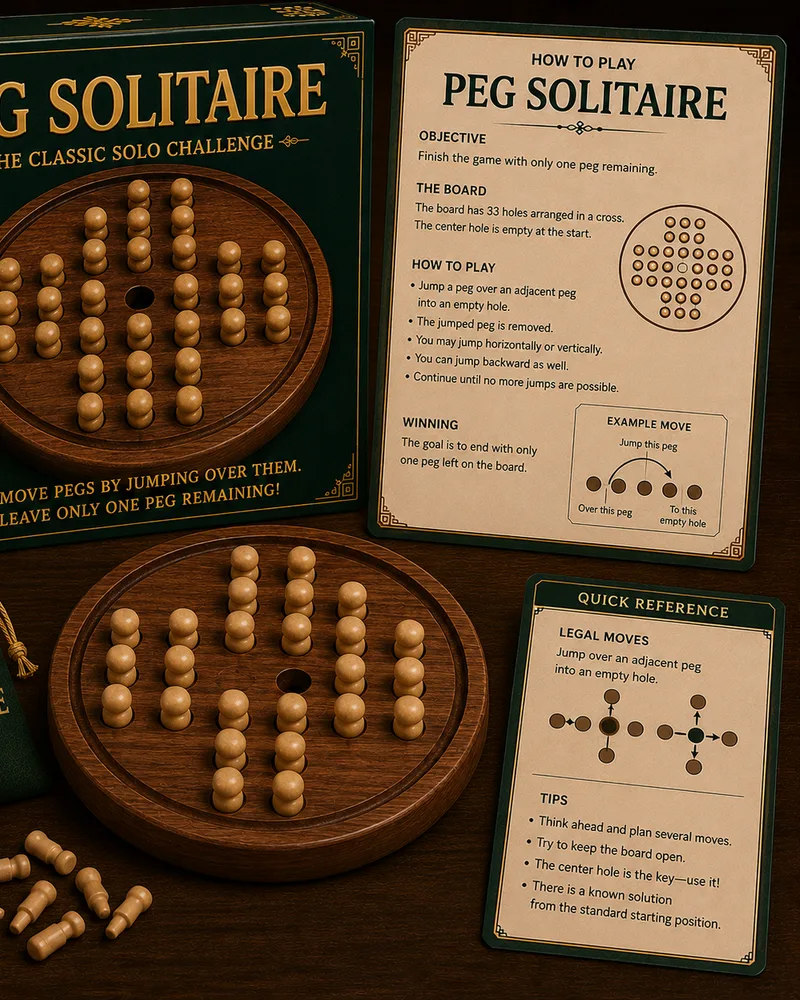 NEW
NEWPeg Solitaire
Puzzle102.0K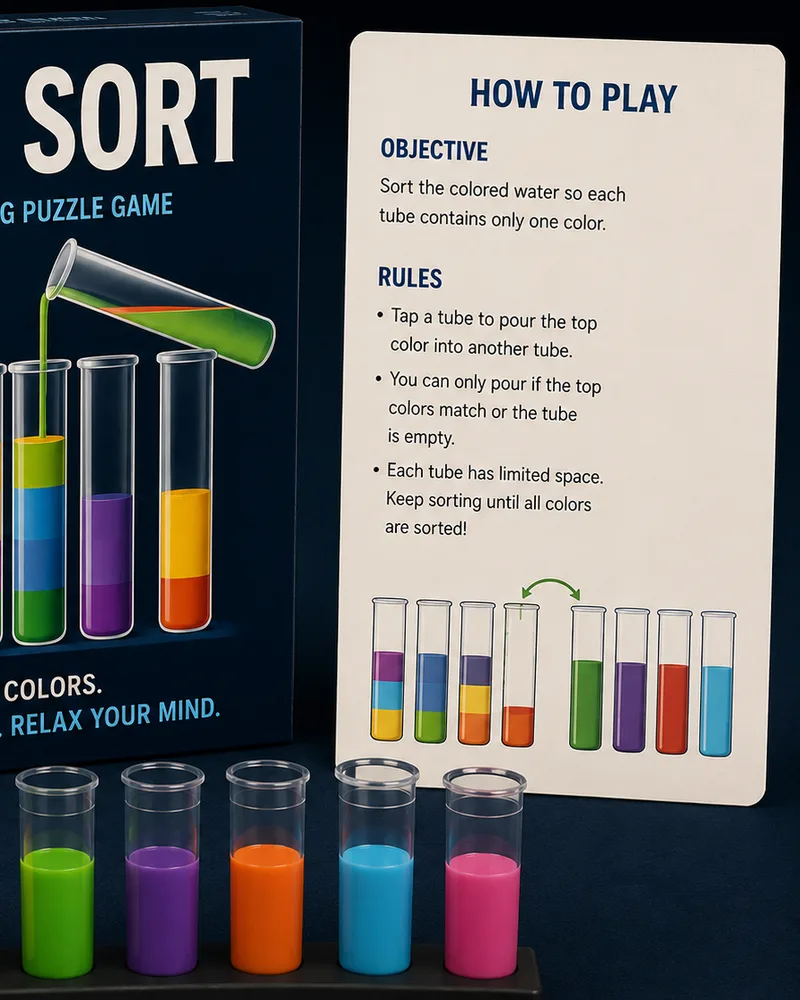 HOT
HOTWater Sort
Puzzle240.0K NEW
NEWMastermind Style
Puzzle110.0K NEW
NEWBall Sort
Puzzle205.0K NEW
NEWNumber Match
Puzzle158.0K HOT
HOTMatch 3
Puzzle410.0K NEW
NEWUnblock
Puzzle188.0K NEW
NEWPipe Connect
Puzzle138.0K NEW
NEWColor Connect
Puzzle142.0K NEW
NEWArrow Connect
Puzzle129.0K NEW
NEWUntangle
Puzzle134.0K NEW
NEWJigsaw Puzzle
Puzzle150.0K HOT
HOTBubble Shooter
Arcade420.0K NEW
NEWKakuro
Puzzle118.0K
Popular right now 🔥
All →
Klondike Solitaire
Sudoku
2048
Chess
Ludo
Snake
Block Puzzle
Minesweeper
Checkers
Spider Solitaire
Mahjong Solitaire
Snakes & Ladders
Word Search
Connect Four
Brick Breaker
Tic-Tac-Toe
Bubble Shooter