Peg Solitaire
About Peg Solitaire
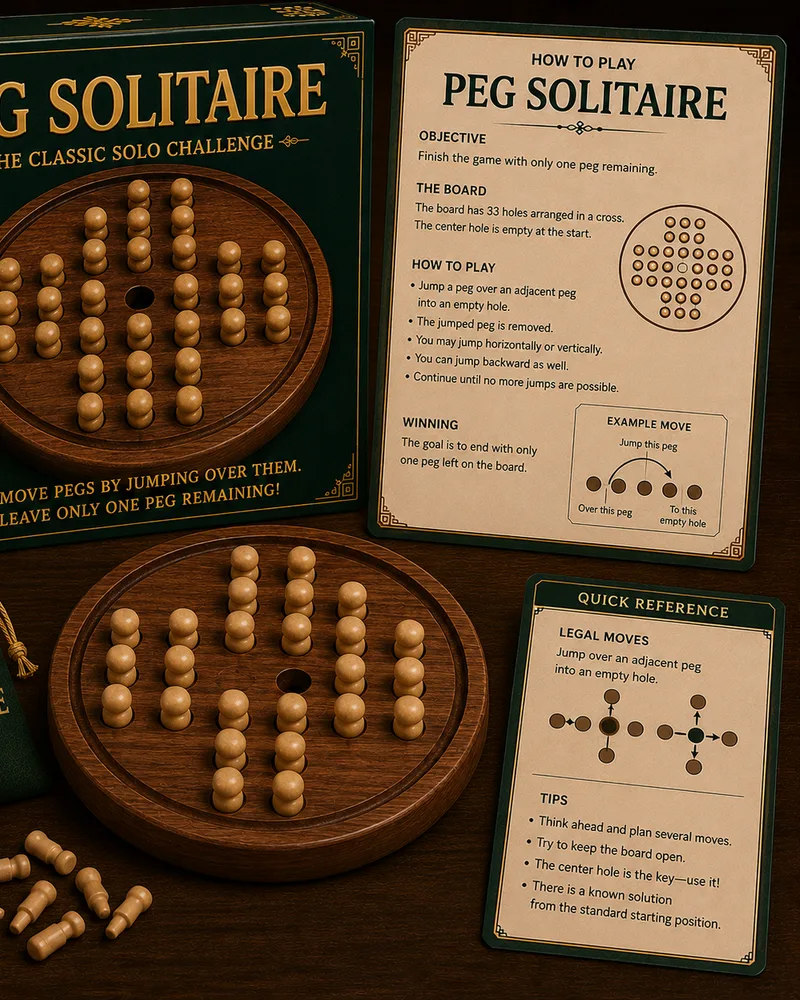
Peg Solitaire is a single-player puzzle played on a board full of holes, all filled with pegs except one. You remove pegs by jumping one over another into an empty hole, and your goal is to keep jumping until as few pegs as possible remain, ideally just one.
The game has been played in Europe since at least the 1600s, most often on a distinctive cross-shaped board. Its lasting appeal is the tension between how simple each jump is and how hard the whole puzzle is to finish clean. It is easy to clear most of the board and maddeningly common to strand two pegs that can never reach each other.
You can play Peg Solitaire free in your browser with no download. The rules take a moment to learn, since every move is just a single jump, but solving it down to one peg is a genuine challenge that rewards planning. The board is the same classic cross layout every game, so the challenge comes from your own play, not a shifting puzzle.
Controls
You play by making jumps. Tap a peg, or click it with a mouse on a laptop, then tap or click the empty hole two spaces away, over a neighboring peg, and it hops there while the jumped peg is removed.
The rules of a jump are strict and simple:
- A jump moves a peg straight over one adjacent peg into an empty hole directly beyond it. Jumps run horizontally and vertically only, never diagonally.
- The jumped peg is removed from the board. Since every move takes exactly one peg away, the board slowly empties toward your final peg.
You win by removing every peg but one, and the classic perfect finish leaves that last peg in the center hole.
If a jump backfires, Undo steps back one move at a time, so you can rethink a stretch of the board without restarting the whole game.
Tips
- Work toward the center, not away from it. Pegs pushed out to the arms of the board get stranded easily, so aiming your jumps to keep pegs near the middle leaves you more options late in the puzzle.
- Avoid leaving isolated pegs. A peg with no neighbor to jump or be jumped is stuck for good, so before each move, check that you are not marooning a peg in a corner.
- Clear the arms early. The outer sections of a cross board are the hardest to empty at the end, so removing those pegs while you still have support around them prevents a dead end.
- Think two jumps ahead. A jump that looks good now can leave a peg unreachable next turn, so picturing the board after your move helps you avoid traps you cannot undo.
- Set up chains of jumps. Positioning pegs so one jump lands where it can immediately jump again lets you clear several pegs efficiently and keep the board connected.
- Restart without frustration. Getting stuck with a few scattered pegs is normal even for experienced players, so treat a stall as information about what to do differently next time.
Frequently asked questions
Is Peg Solitaire free to play?
Yes. You can play as much as you want with no download and no account.
How do you play Peg Solitaire?
You start with a board full of pegs and one empty hole. You remove pegs by jumping one over an adjacent peg into the empty hole beyond it. You keep jumping to leave as few pegs as possible.
How do you win?
The classic goal is to remove every peg but one. The perfect finish leaves that final peg sitting in the center hole of the board.
Why do I keep getting stuck with a few pegs?
Pegs get stranded when they have no neighbor left to jump. It usually happens from emptying the center too early or pushing pegs out to the arms, so working toward the middle helps.
Can I play Peg Solitaire on my phone?
Yes. It runs in any modern mobile browser, and you make jumps by tapping, so it works well on phones and tablets.
How do I get better at Peg Solitaire?
Keep your pegs near the center, clear the outer arms early, and think a move or two ahead so you never isolate a peg. Chaining jumps together keeps the board connected toward a clean finish.
More like this
Sudoku
Puzzle1.7M NEW
NEW2048
Puzzle1.5M
Minesweeper
Puzzle845.0K
Mahjong Solitaire
Puzzle660.0K NEW
NEWBlock Puzzle
Puzzle890.0K NEW
NEWTower of Hanoi
Puzzle96.0K NEW
NEWLights Out
Puzzle88.0K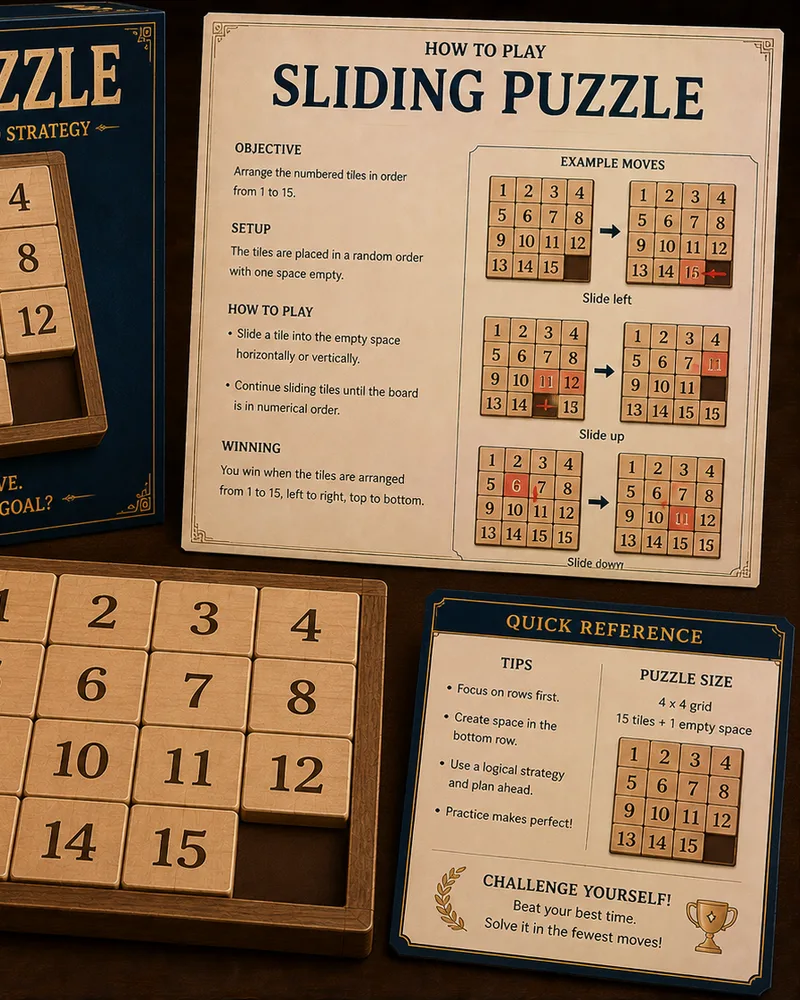 NEW
NEWSliding Puzzle
Puzzle142.0K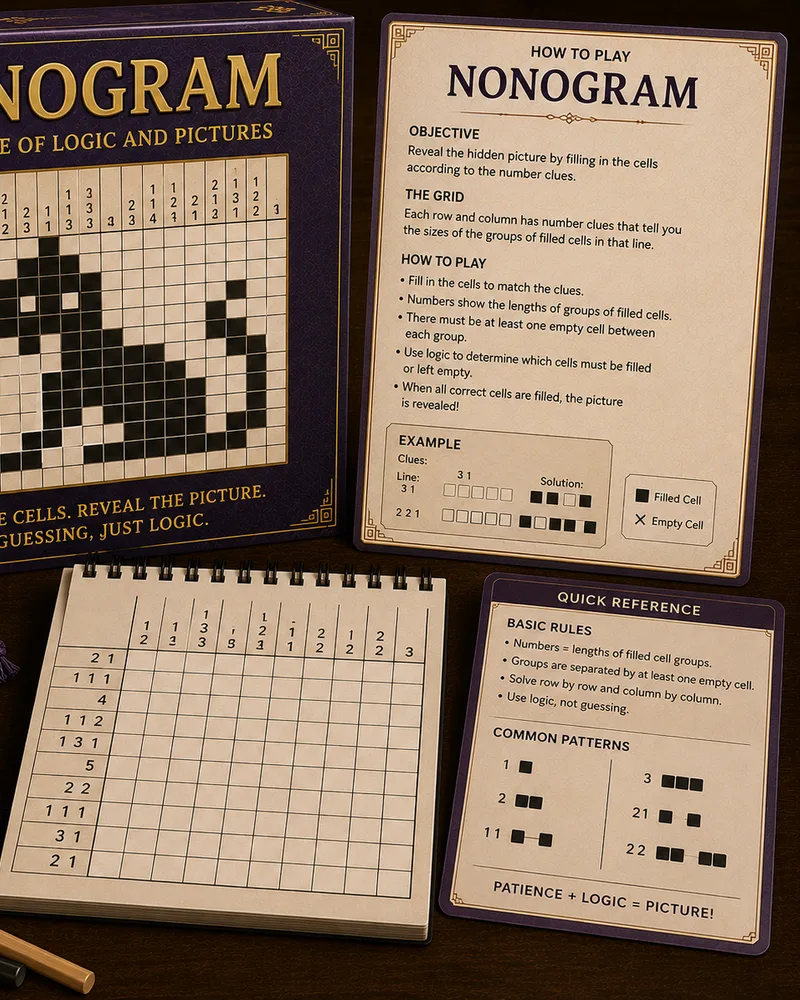 NEW
NEWNonogram
Puzzle134.0K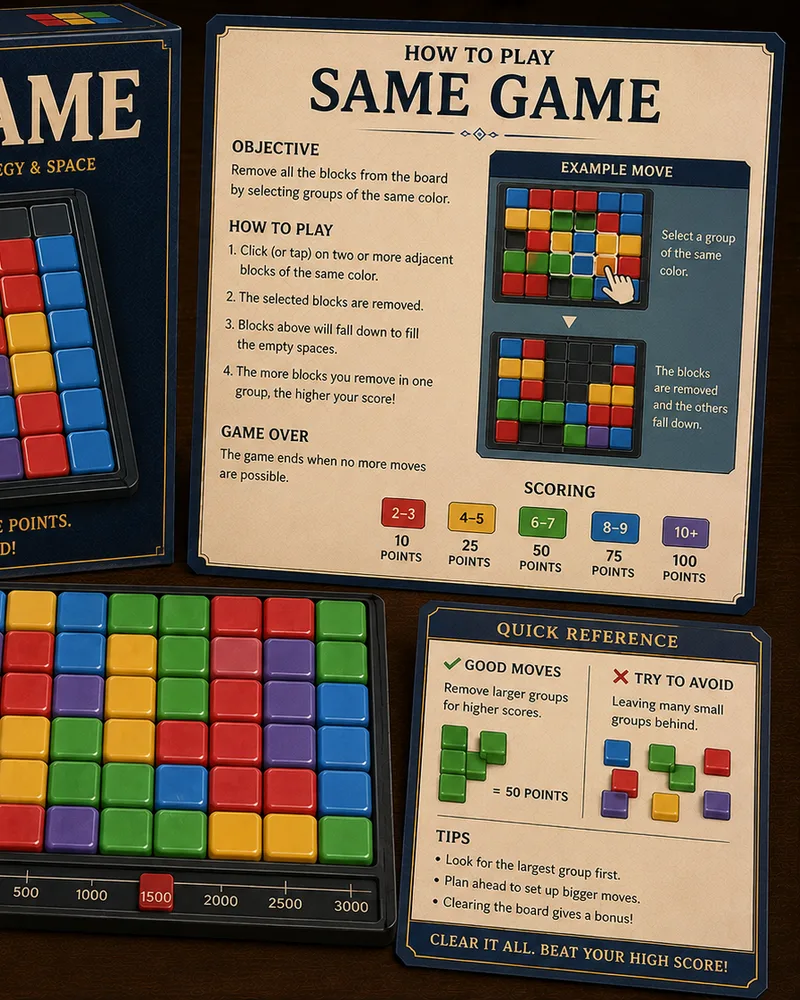 NEW
NEWSame Game
Puzzle118.0K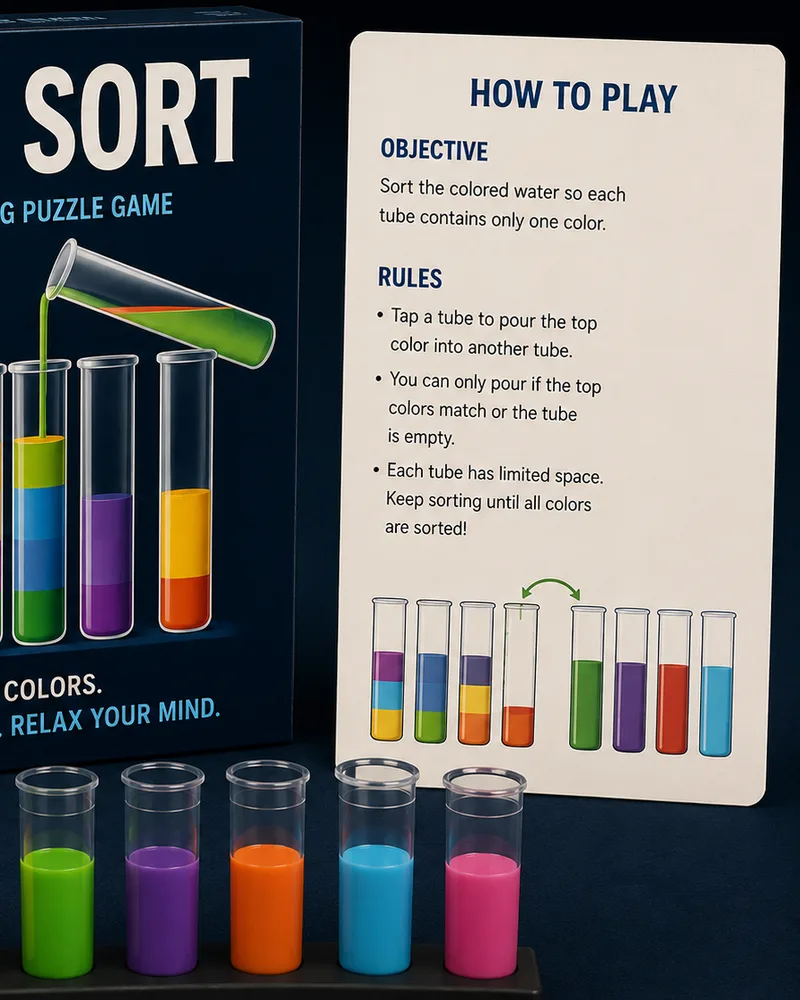 HOT
HOTWater Sort
Puzzle240.0K NEW
NEWMastermind Style
Puzzle110.0K NEW
NEWBall Sort
Puzzle205.0K NEW
NEWNumber Match
Puzzle158.0K HOT
HOTMatch 3
Puzzle410.0K NEW
NEWUnblock
Puzzle188.0K NEW
NEWPipe Connect
Puzzle138.0K NEW
NEWColor Connect
Puzzle142.0K NEW
NEWArrow Connect
Puzzle129.0K NEW
NEWUntangle
Puzzle134.0K NEW
NEWJigsaw Puzzle
Puzzle150.0K HOT
HOTBubble Shooter
Arcade420.0K NEW
NEWKakuro
Puzzle118.0K
Popular right now 🔥
All →
Klondike Solitaire
Sudoku
2048

Chess
Ludo
Snake
Block Puzzle
Minesweeper
Checkers
Spider Solitaire
Mahjong Solitaire
Snakes & Ladders
Word Search
Connect Four
Brick Breaker
Tic-Tac-Toe
Bubble Shooter