Lights Out
About Lights Out
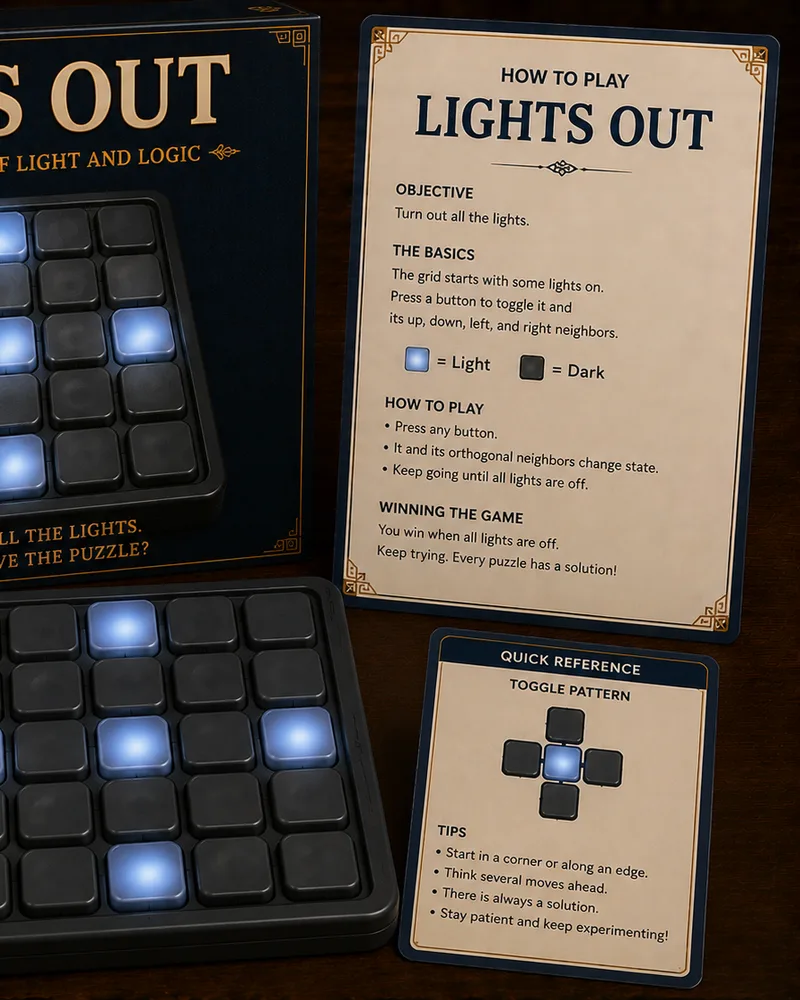
Lights Out is a puzzle played on a grid of lights, some on and some off. Pressing any light toggles it along with the four lights directly next to it. Your goal is simple to state and tricky to reach: turn every light off.
It began as a handheld electronic toy in 1995 and became a favorite of puzzle fans because it looks like trial and error but is really built on neat mathematics. Presses interact in surprising ways, so the moment you stop poking at it randomly and a genuine pattern clicks into place is exactly why people keep playing.
You can play Lights Out free in your browser with no download. It is easy to understand right away, since you just tap lights to toggle them, but solving a board efficiently takes real thought. The grids grow as your level rises, giving your pattern-finding a bigger and more satisfying challenge.
Controls
You play by pressing lights. Click a light with a mouse on a laptop, or tap it on a phone, and it toggles between on and off, along with the lights directly above, below, to the left, and to the right of it.
Two facts about how presses work are the whole key to the puzzle:
- A single press flips the light you tapped and its four immediate neighbors. Corner and edge lights simply have fewer neighbors to flip.
- Pressing twice cancels out because toggling the same light two times returns everything to how it was. That means only whether you press a light an odd or even number of times matters, not the order.
You solve the puzzle by turning every light off at once.
The grid grows larger across eight levels, so the patterns you need to find get bigger and more intricate.
Tips
- Think in patterns, not sequences. Because pressing a light twice undoes itself, the order of your presses does not matter, only which lights you press. That shifts the puzzle from a sequence to a pattern to find.
- Try the top-down method. Work row by row: press lights in a row to clear the row directly above it. Repeating this pushes all the lit lights toward the bottom, where they become easier to finish off.
- Watch what the bottom row tells you. After clearing everything above with the top-down method, the pattern left in the bottom row reveals which lights in the top row you should have started with.
- Never press a light twice by accident. Since two presses cancel out, a stray repeated tap just wastes effort and muddles your pattern, so keep track of what you have already pressed.
- Start over cleanly if you get lost. Random poking rarely recovers a tangled board. Resetting and applying a consistent method is faster than trying to fix a mess press by press.
- Notice symmetry in the starting board. Many boards begin with a symmetric pattern, and the solution often shares that symmetry, so spotting it can point you toward the right lights to press.
Frequently asked questions
Is Lights Out free to play?
Yes. You can play as many puzzles as you want with no download and no account.
How do you play Lights Out?
You are given a grid with some lights on. Tapping a light toggles it and its four immediate neighbors. Your goal is to turn every light off.
How do you solve Lights Out?
A dependable method is to work from the top down, pressing lights in each row to clear the row above, then use the leftover pattern in the bottom row to work out which top-row lights to press first.
Does the order of presses matter?
No. Because pressing a light twice cancels out, only which lights you press an odd number of times matters. That is why it helps to think of the solution as a pattern rather than a sequence.
Can I play Lights Out on my phone?
Yes. It runs in any modern mobile browser with tap controls, so it works well on phones and tablets.
How do I get better at Lights Out?
Practice the top-down clearing method and learn to read the bottom row's leftover pattern. Once you think in patterns instead of random taps, even the larger grids become solvable.
More like this
Sudoku
Puzzle1.7M NEW
NEW2048
Puzzle1.5M
Minesweeper
Puzzle845.0K
Mahjong Solitaire
Puzzle660.0K NEW
NEWBlock Puzzle
Puzzle890.0K NEW
NEWTower of Hanoi
Puzzle96.0K NEW
NEWSliding Puzzle
Puzzle142.0K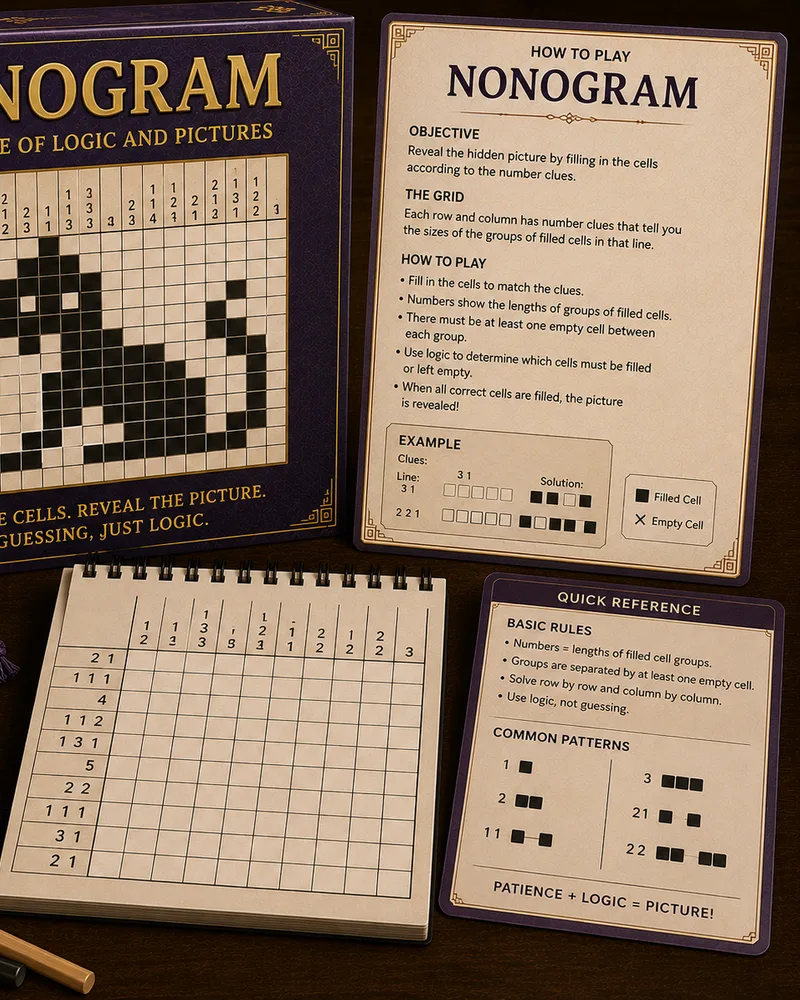 NEW
NEWNonogram
Puzzle134.0K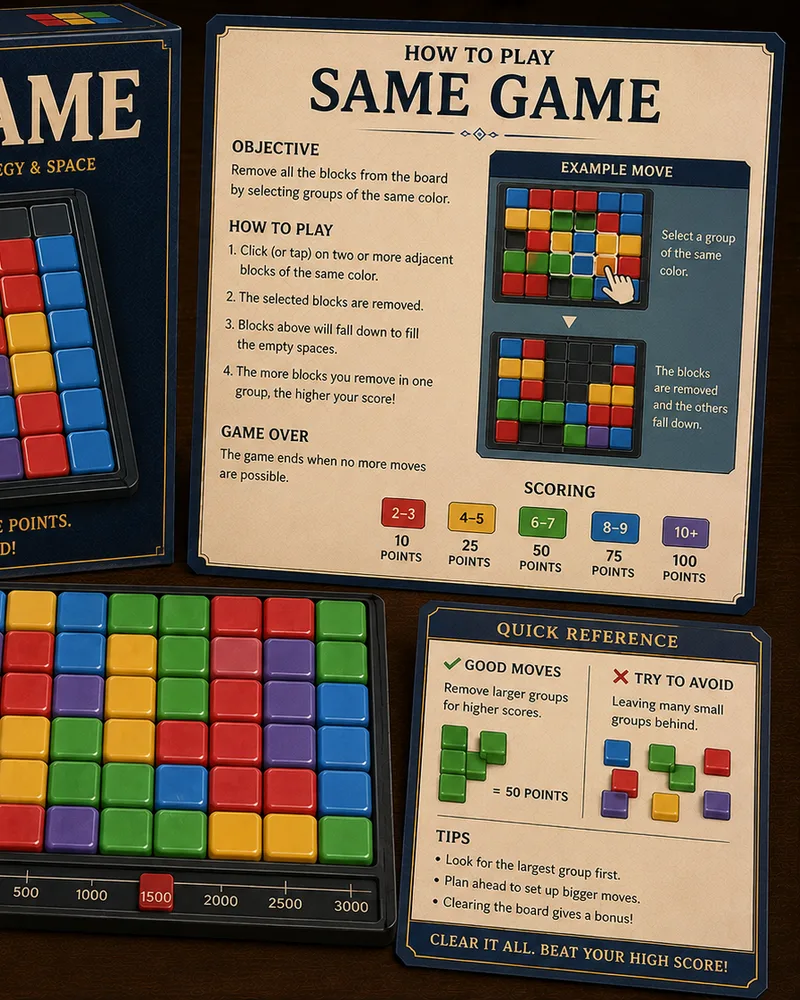 NEW
NEWSame Game
Puzzle118.0K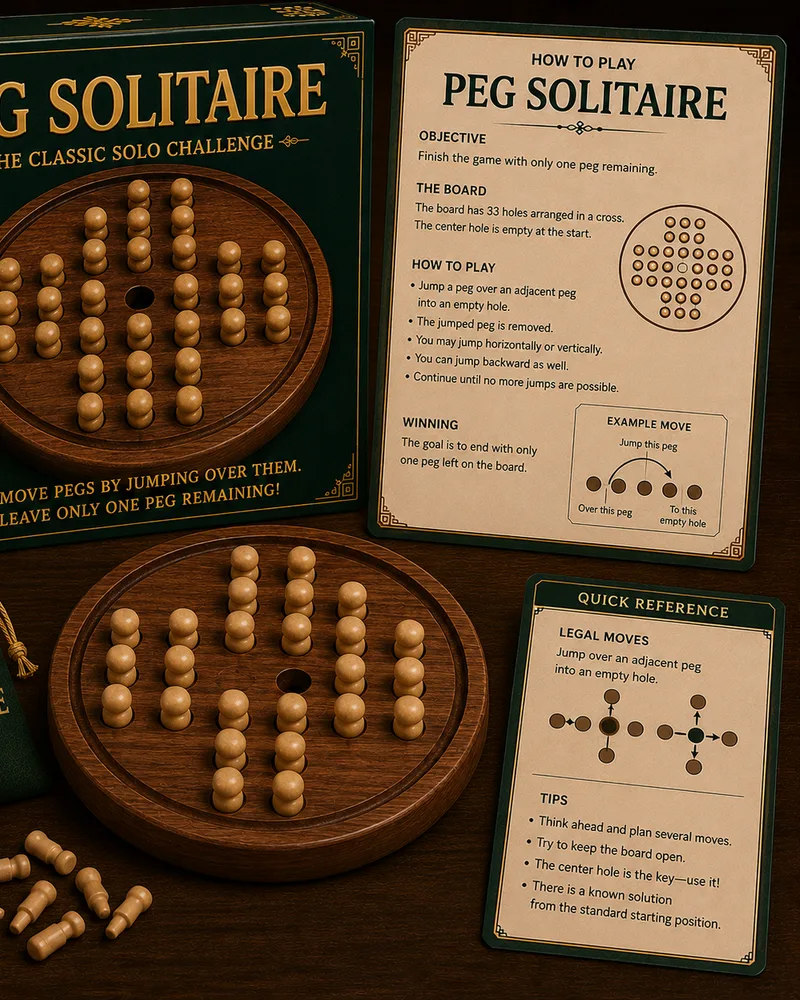 NEW
NEWPeg Solitaire
Puzzle102.0K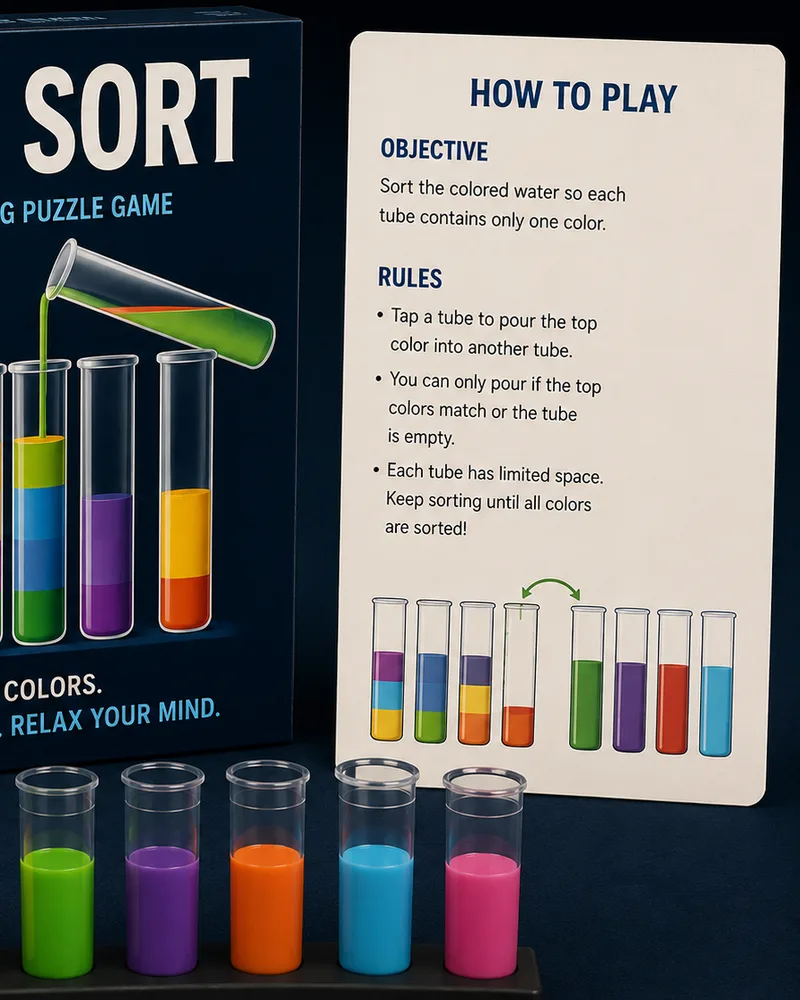 HOT
HOTWater Sort
Puzzle240.0K NEW
NEWMastermind Style
Puzzle110.0K NEW
NEWBall Sort
Puzzle205.0K NEW
NEWNumber Match
Puzzle158.0K HOT
HOTMatch 3
Puzzle410.0K NEW
NEWUnblock
Puzzle188.0K NEW
NEWPipe Connect
Puzzle138.0K NEW
NEWColor Connect
Puzzle142.0K NEW
NEWArrow Connect
Puzzle129.0K NEW
NEWUntangle
Puzzle134.0K NEW
NEWJigsaw Puzzle
Puzzle150.0K HOT
HOTBubble Shooter
Arcade420.0K NEW
NEWKakuro
Puzzle118.0K
Popular right now 🔥
All →
Klondike Solitaire
Sudoku
2048
Chess
Ludo
Snake
Block Puzzle
Minesweeper
Checkers
Spider Solitaire
Mahjong Solitaire
Snakes & Ladders
Word Search
Connect Four
Brick Breaker
Tic-Tac-Toe
Bubble Shooter